Back to the garden
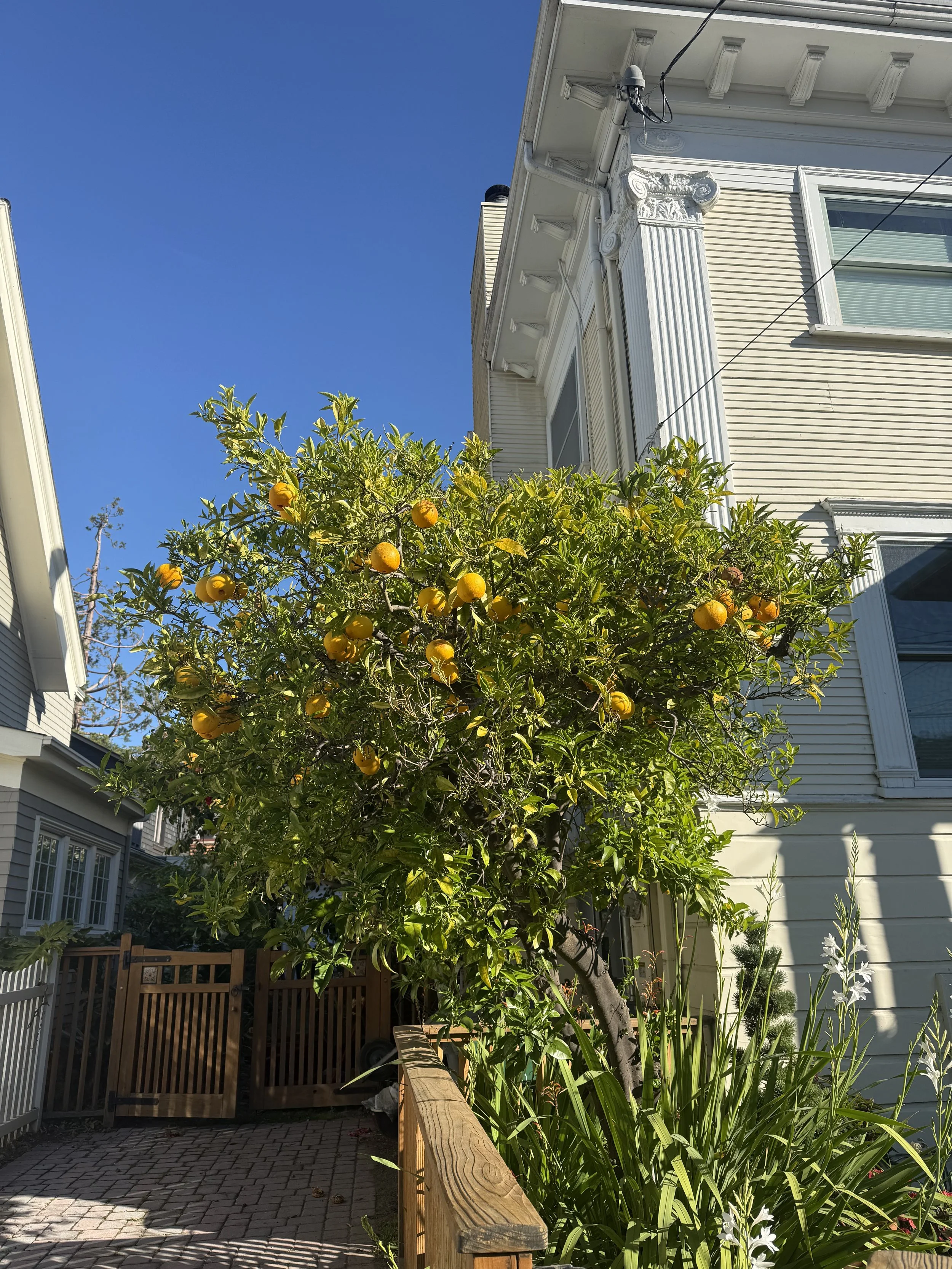
Twice a year, I assess the progress of the garden. At this point, I have been gardening at the same house in Berkeley for 40 years. Some plants, like the small orange tree and the tall camellias, were here when we bought the house. The oranges are not very sweet, despite my efforts. I have been told that our summers are not really warm enough to grow sweet navel oranges. I deep water, I fertilize. Last year an arborist thinned the branches so that the shape is elegant and sun can reach every orange globe. It looked festive at Christmas time, but the taste is still meh. Yes, I can make marmalade, but the fact is no one but me will eat marmalade, and everyone is cutting back on sugar. But I would not sacrifice such a plucky survivor.
On the other hand, I just removed a large rhododendron which had bloomed reliably for decades but gradually turned brown this summer, buds and all. At first I suspected that the problem was not enough water in April when we were away for a month. The leaves on all four of my rhodies looked a bit scorched and the sprinkler box was unplugged when I checked. But the others recovered quickly, while the desiccation of the leaves proceeded branch by branch over the summer on the big one. I cut off pieces, hoping I could forestall total catastrophe, then I gave up. It’s gone now. Yet even as I mourn, I welcome the opportunity to plant something else in that spot. In such an old garden, only removing a plant opens up space for newcomers. I daydream of possibilities.
I wrote an article mourning the CDC, which appears in The Threepenny Review, Spring 2026. I had to say something. The Threepenny Review